
What is the Lead Time for Flexible Printed Circuit Manufacturers?
Lead Time for Flexible Printed Circuit Manufacturers
A PCB is a circuit board that connects various electrical components. The process of fabricating PCBs involves etching, drilling, routing and soldering the components onto the board. The lead time for PCBs depends on the complexity of the design, and the fabrication facility’s capacity. Generally, simple designs can be delivered in days, while more complex ones may take weeks or even months to produce.
Flexible printed circuit manufacturers have a lot of experience in creating different types of products. They have a reputation for providing high quality boards at a reasonable price. Their team works closely with clients to create innovative products that help solve problems and enhance lives. In addition, they offer services like design for manufacturing (DFM) and prototype production.
When selecting a flexible printed circuit manufacturers, it is important to consider the lead time they offer. The most reliable companies will provide their customers with accurate lead times, so that they can plan their projects accordingly. They will also be able to meet the demands of their customers, regardless of the circumstances.
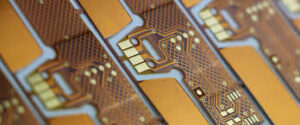
What is the Lead Time for Flexible Printed Circuit Manufacturers?
Flex circuits are a type of printed circuit board that can bend and twist during assembly, giving them a greater range of flexibility than rigid PCBs. They are used in a wide variety of devices, including smartphones and wearable technology. They are often a critical component in electronic devices that require space-saving features and small form factors.
The manufacturing process for a flex circuit begins with a layer of Polyimide on both sides of the substrate, followed by two separate conductive layers. These are bonded together by means of epoxy pre-preg, and interconnected via plated through holes (PTH). The conductive layers are covered with a layer of Polyimide to provide insulation and mechanical support.
In order to ensure that a flex circuit will work as intended, it is important to follow best practices during the design phase. For example, it is important to make sure that the flex stack-up has sufficient thickness to accommodate bending and that there are no shorts or open loops. It is also important to choose the right materials for a flex circuit. In general, polyimides and FR-4 are the preferred materials. In some cases, specialty flex materials are required for medtech applications that come into contact with patients.
The speed at which a flex circuit is produced depends on the manufacturer’s capacity and the material inventory. In the past few years, many PCB manufacturers have experienced delays due to a lack of raw materials. This is partially due to the pandemic, but it is also a result of increased demand from the consumer electronics industry. Choosing the right fast-turn flex PCB manufacturer will help you avoid these delays. When comparing quotes, be sure to look for manufacturers that offer the most value for your money. In addition, they should be able to provide you with a complete list of technical questions (TQs) within hours of receiving your order. This will help you address issues that may delay the production of your PCBs and save you valuable time.